


Virginia House And Senate Approve Differing Marijuana Sales Legalization Bills, Setting Up Final Votes And Negotiations
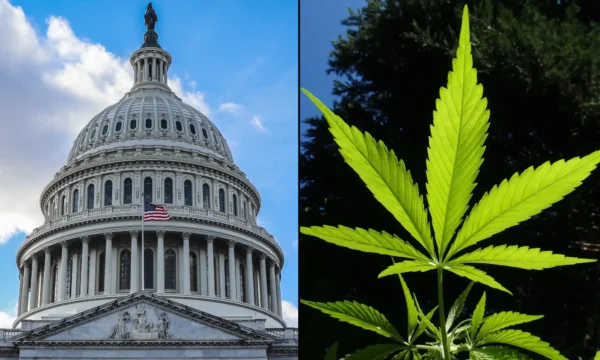
Virginia marijuana sales legalization is finally breathing fire on the stovetop, and you can smell the sauce thickening. After years of simmering, the House and Senate just slid their own versions of legal cannabis sales across the counter, knives out and timers set. Final floor votes are queued up, the crossover deadline is staring everyone down, and somewhere in the middle of it all sits the promise of a regulated Virginia cannabis market that actually works—one that turns personal possession and home grow, legalized back in 2021, into a bona fide retail reality. The stakes are obvious: legal cannabis revenue, real jobs, consumer protections, and whether this state can stick the landing on marijuana policy reform without cracking its own ribs on cannabis taxation, licensing, and timelines. Even as lawmakers move the ball, a separate resentencing push for people with past cannabis convictions hums in parallel, reminding everyone what this fight was supposed to be about in the first place.
The fork in the road: taxes, timing, and who holds the keys
Two bills, two recipes—both aiming for legalization of adult-use sales, but with different heat levels. Del. Paul Krizek’s House plan and Sen. Lashrecse Aird’s Senate version would both put the Virginia Cannabis Control Authority era on the map, but they disagree on when to flip the sign to “open,” how to split the tax bite, and what existing medical operators should pay to cross the river into the recreational market. Krizek pitched it plainly on the floor—this is a framework with licensing, oversight, enforcement, and a lot of late-night tinkering (his remarks are here). The bones of both bills line up with months of planning, but the devil, as usual, is in the margins. If you want to dive into the black-and-white, the bill texts are posted at SB 542 and HB 642. Here’s what Virginians should actually watch:
- Purchasing limits: up to 2.5 ounces of marijuana per transaction, or regulator-defined equivalent in other products.
- Start date: House opens legal sales November 1, 2026; Senate says January 1, 2027.
- Tax structure: Senate layers a 12.875% excise tax + 1.125% state sales tax + mandatory 3% local; House pairs a 6% excise with 5.3% retail sales tax and lets locals add up to 3.5%.
- Regulators: House keeps the Virginia Cannabis Control Authority in the driver’s seat; Senate would fold it into a combined Alcoholic Beverage and Cannabis Control Authority.
- Revenue split: House sends 60% to an equity reinvestment fund, 10% to early childhood education, 25% to behavioral and developmental health, 5% to public health; Senate shifts that to 30% equity, 40% early childhood, 25% behavioral health, 5% public health.
- Local control: cities and counties can’t opt out of allowing marijuana businesses.
- Consumer rules: delivery is allowed; serving sizes capped at 10 mg THC, with 100 mg THC per package maximum.
- Medical conversion: existing operators can join adult-use—with a conversion fee of $15 million (Senate) or $10 million (House).
- Workforce: labor peace agreements are required.
- What’s next: a legislative study on on-site consumption, microbusiness event permits (think farmers markets or pop-ups), and whether ABC gets deeper into cannabis enforcement.
Criminal penalties: pulled from the stew before they spoiled it
There was a moment—a tense one—when the Senate’s bill flirted with fresh penalties for illegal cannabis activity. Buying from unlicensed sources, possession by people under 21, unlicensed cultivation, even transport with intent to distribute across state lines were all on the chopping block for harsher treatment. Then, like a chef who realizes the salt shaker just dumped into the pot, the Finance and Appropriations Committee reversed course. The message landed: if legalization is about displacing the illicit market with a transparent, regulated one, don’t lace the rollout with new criminal traps that invite the old harms back in. The pivot was an acknowledgment that a healthy Virginia cannabis market depends on reasonable access, fair prices, and coherent enforcement—not performative crackdowns. Or, as Krizek framed it, “a framework” that’s been honed for years—one designed for oversight, not overreach. Legalization that actually functions is a public-health project and an economic machine. Get the taxes wrong, or the rules too punitive, and you’ll watch consumers stay where the prices are low and the questions are few.
The national echo: taxes, timelines, and the feds moving like wet cement
Zoom out and Virginia’s debate looks painfully familiar. States that overcook cannabis taxation end up with consumers locked out and the illicit market booming—less legal cannabis revenue, more frustration. Pennsylvania’s ongoing argument is instructive; as one argument put it plainly: Pennsylvania Must Not Over-Tax Marijuana If Legalization Is Going To Work Well (Op-Ed). Then there’s Washington, where reform moves at the speed of a bureaucratic glacier. One GOP lawmaker even deadpanned that federal rescheduling could take decades, an eye-roll codified in Justice Department ‘Should Take About 20 Years’ To Reschedule Marijuana, GOP Congressman Says. Meanwhile, hemp and cannabinoids sit in a regulatory purgatory that Congress keeps threatening to “fix” with bans instead of coherent standards—hence the nudge to regulate smartly in Congress Should Delay The Federal Hemp Ban And Instead Enact Regulations For THC And CBD Products (Op-Ed). Across the map, you can feel the same push-pull: do it fast, do it right, and don’t forget the people the war on weed left behind. Nebraska’s scene underscores the stakes too, where candidates are publicly committing to protect patient access from federal meddling, as laid out in Nebraska Congressional Candidates Vow To Fight For Medical Marijuana Access And Protect State Law From Federal Intervention.
What Virginia gets if it lands the plane
With a new governor on record in support of adult-use sales, Virginia has a window to get the mechanics right: reasonable cannabis taxation that doesn’t kneecap small operators; a clear path for medical conversions without letting a few incumbents swallow the market; delivery rules and serving caps that protect consumers; and revenue carved back into communities through equity reinvestment, early childhood education, and public health. If lawmakers reconcile the House and Senate differences without jacking up prices or smothering new entrants in red tape, the state can stand up a regulated market that actually channels demand where it belongs. Get sloppy and the illicit market will keep grinning. The promise here isn’t just storefronts and receipts—it’s normalization. Consumers buy tested products, workers organize, and the state funds real programs with money that used to disappear into the shadows. That’s marijuana policy reform as public infrastructure, not a headline.
Don’t overlook the parallel track: resentencing legislation that would give people serving time or under supervision for certain pre-2021 marijuana offenses an automatic hearing to consider sentence modification. It’s a practical, overdue piece of justice that says legalization should reach backward as well as forward. Put it all together and Virginia is at a hinge moment—two bills, one market, and a chance to swap a gray economy for something transparent, taxable, and sane. Keep an eye on the final votes, the bicameral horse-trading, and the price points they lock in; those will determine whether consumers flock to legal shelves or stick to handshakes. And when you’re ready to explore compliant, premium THCA options with the same appetite you bring to a great meal, head over to our shop: https://thcaorder.com/shop/.