

Marijuana Advocates Hope Trump’s Attorney General Will Give A Rescheduling Update At Congressional Hearing
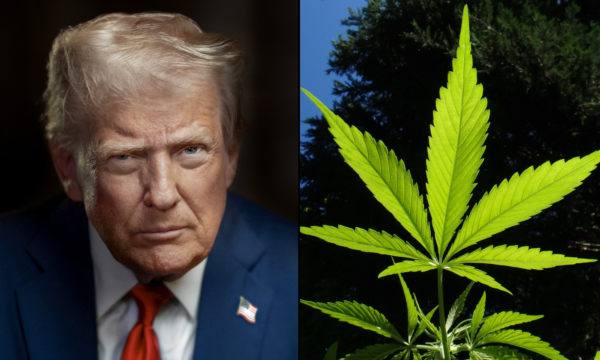
Federal marijuana rescheduling update: the clock is ticking, and Washington’s breathing into a paper bag. Nearly two months after President Donald Trump ordered cannabis moved from Schedule I to Schedule III, Attorney General Pam Bondi is set to sit under hot lights at a House Judiciary oversight hearing, and the country wants receipts. The Justice Department has mostly kept its lips stitched, aside from a recent acknowledgement to Salon that it’s “working to identify the most expeditious means of executing” the order—a bureaucratic koan that suggests even the referees are still finding the rulebook. Bondi, a longtime critic of marijuana reform, skipped the executive order signing. Her silence since has turned a routine policy shift into a smoky backroom mystery. Wednesday’s hearing—posted on the committee’s calendar here—offers lawmakers a narrow window to pry the lid and ask: Who’s steering this thing, and how fast are we going? House Judiciary Committee hearing.
On paper, the path looked simple. A scientific review kicked off in the previous administration. A draft rule exists. Then came the executive order—a rubber stamp, many assumed. But federal machinery rarely hums; it grinds. One former official publicly claimed DEA is drafting a rule “ASAP,” which raised eyebrows because a rule already sits at DOJ, and starting over triggers fresh rounds of administrative review and public comment. Meanwhile, the White House has touted the order as a win while deftly punting process questions to Justice. Translation: expectations are the soufflé; procedure is the collapsed middle. The result is a paradox where cannabis may be a Schedule III drug in principle, but still a Schedule I headache in practice until DOJ, DEA, and the Office of Legal Counsel agree on the choreography—and someone signs.
Advocates, who’ve swallowed enough broken promises to fill a grow tent, are wary but patient. They note Bondi’s history as Florida’s attorney general and worry her instincts might lean toward molasses, not espresso. Reform groups stress that rescheduling is a floor, not a ceiling—helpful for medical acknowledgment and tax relief, but not a cure-all for criminal justice or interstate commerce. A recent national poll from the telehealth platform NuggMD found overwhelming support among cannabis consumers—north of eighty percent—for the rescheduling order, a reminder that the culture has sprinted ahead while policy ties its shoes. If DOJ lands the plane on Schedule III, real-world impacts follow: businesses could shed the tax anvil of 280E; researchers gain a clearer runway; patients get a federal nod that their medicine isn’t a punchline. But don’t confuse momentum for resolution; until the rule is final, permits are ink, and enforcement guidance is on paper, this is still a promise in draft.
Politics, of course, is the grit in every gear. Two Republican senators recently tried to block rescheduling outright. Congressional researchers even floated that DOJ could slow-walk the order by restarting scientific review. DEA has said appeal issues related to rescheduling remain “pending.” And Bondi missed a separate statutory deadline to ease research rules for Schedule I substances—cannabis and psychedelics among them—hardly a confidence booster for timelines. Yet beyond the Beltway, the ground keeps shifting. Minnesota just opened a government-run cannabis store, a quiet experiment in public ownership that would have sounded like satire a decade ago—see A New Government-Run Marijuana Store Just Opened In Minnesota. Pennsylvania’s House is publicly scolding the Senate for dragging its feet on legalization, a family argument loud enough to rattle the china—read Pennsylvania House Lawmakers Slam Senate Over Marijuana Legalization Inaction As Governor Again Calls For Reform. Regulators, too, have clocks to beat: the Food and Drug Administration faces a mandated sprint to publish cannabinoid lists and define hemp product “containers,” a wonky but pivotal move for labeling and enforcement—details in FDA Faces Deadline To Publish Cannabinoid Lists And Define Hemp Product ‘Containers’ Under Law Trump Signed. And in Virginia, a bill to allow medical cannabis use in hospitals—nudged along by the federal rescheduling drumbeat—is inching toward a Senate floor vote, proof that federal signals ripple fast in clinical corridors—see Virginia Bill To Allow Medical Marijuana Use In Hospitals Following Federal Rescheduling Advances Toward Senate Floor Vote.
So here we are: a Capitol hearing room, a former reform skeptic in the hot seat, a market waiting for clarity, and millions of patients who don’t have time for procedural labyrinths. The questions practically write themselves. What’s the precise administrative route DOJ will take to finalize Schedule III? How will Justice coordinate with DEA to avoid duplicative rulemaking? Will there be interim guidance to stabilize banking, research protocols, and enforcement discretion while the rule winds through the pipeline? And when—exactly—will the public see a timetable? In a country that can’t decide whether cannabis is medicine, vice, or both, ambiguity costs money, stifles science, and clogs courts. If Bondi walks in with dates, drafts, and directives, she’ll cool the temperature. If not, expect the pressure to spike—from statehouses, from industry, from patients, and from a public that’s outgrown the old script. And if you’re navigating this shifting terrain and want compliant, high-quality THCA options while the feds sort themselves out, explore our selection at https://thcaorder.com/shop/.