



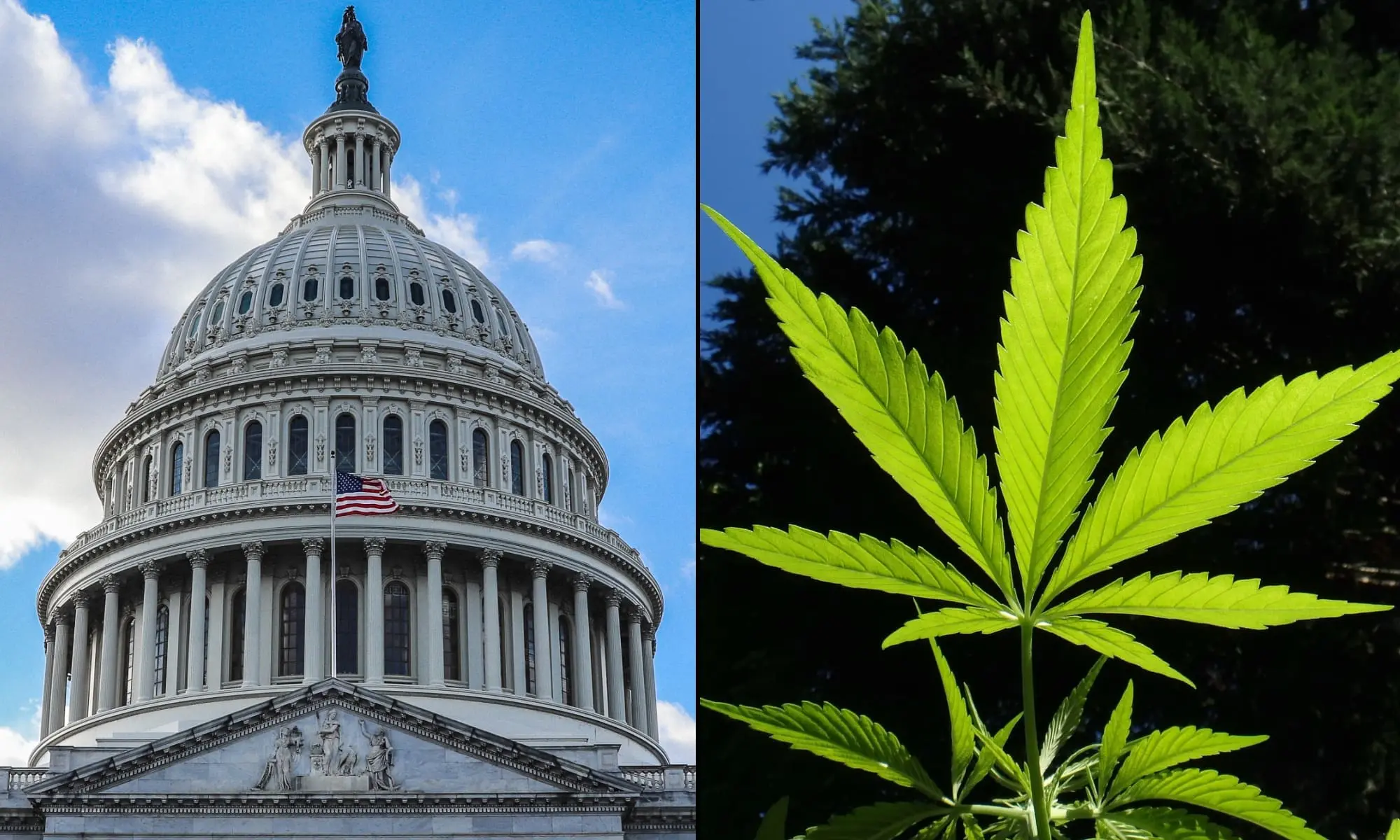
GOP Lawmakers Urge Trump Not To Reschedule Marijuana In Last-Ditch Effort To Block Historic Reform
Marijuana rescheduling: the last-ditch letters, the tax code, and a late-night fight for who gets to write the rules
Here we are again, circling the smoky drain where politics meets the plant. Marijuana rescheduling is the headline, and Republican lawmakers are firing off last-ditch letters to stop it—pleading with Donald Trump not to move cannabis to Schedule III and calling the shift a gateway to chaos. They say it sends the wrong message to kids. Empowers cartels. Makes roads more dangerous. The House missive, led by Reps. Pete Sessions and Andy Harris, reads like a dare; the Senate’s, organized by North Carolina’s Ted Budd, wraps the same argument in MAGA lace. Together they frame rescheduling as a tax break for “addiction-for-profit” businesses, a 280E jailbreak that would finally let cannabis companies write off garden-variety expenses like payroll and electricity. The White House, we’re told, will speak to the issue imminently—an announcement reportedly set for Thursday that even allies describe as fluid, a political soufflé that could still fall before it hits the table (White House Confirms Trump Will ‘Address Marijuana Rescheduling’ Thursday, But Reported Details On Final Decision Are ‘Speculation’).
The letters read like a prosecutorial brief written on a red-eye flight—grim, caffeinated, and heavy on worst-case scenarios. The House group warns that moving marijuana to Schedule III would turbocharge “kid-friendly” marketing and shower tax relief on unsavory operators, including Chinese-linked illicit grows they say are laundering fentanyl cash. They argue cannabis belongs in Schedule I—“addictive, no medical use”—and that reclassification is a signal flare to teens that weed is harmless. Over in the Senate, 22 Republicans signed on, from leadership stalwarts to culture-war regulars, framing the change as a threat to public safety and economic vigor; Punchbowl News first flagged the push, a tidy snapshot of an intraparty standoff over what “law and order” looks like in 2025 (see their coverage: Punchbowl News). Public-health angles are getting their moment, too. The rhetoric about hospital burdens and ER risks has a parallel track in policy—the kind that wants numbers, not vibes: GOP Senator Wants Feds To Study Hospital Costs Caused By Marijuana Use. If rescheduling is a fork in the road, one sign points to research and tax normalization; the other points to a moral hazard with a price tag.
Zoom out and the mechanics get less cinematic and more bureaucratic. Schedule III doesn’t legalize anything federally; it acknowledges medical value and lowers the bureaucratic drawbridge for research. It would also finally defang 280E, the orphaned tax penalty that has punished state-licensed cannabis businesses for decades by denying them ordinary deductions—an accountant’s version of waterboarding. Industry folks argue that change levels the playing field and pulls commerce toward the light. The rumored executive order could go further, nudging Congress on banking—the SAFER Banking Act, the long-stranded lifeboat that would let legitimate cannabis firms access lines of credit and payroll services without treating every deposit like contraband. There’s chatter about Medicare-era reforms, too, including a more novel approach to CBD coverage and, maybe, clemency to acknowledge the trail of criminal records left by an old drug war that never quite ended. These are the unsexy levers—the small hinges that swing heavy doors in Washington’s labyrinth—while the megaphone talk is all kids, cartels, and cars.
Of course, Washington loves a jurisdictional food fight, and this one has plenty of cooks. Some Republicans say a president can’t “unilaterally” reschedule by edict; others counter that agencies can do what the Controlled Substances Act already contemplates if the science supports it—Congress always retains the veto pen, but using it is harder than talking about it. Democrats, for their part, call Schedule III half-a-loaf—meaningful for research and taxes, meaningless for justice—especially without broader expungement and sentencing relief. States aren’t waiting around. Courtrooms and capitols are moving in their own time zones: Top Virginia Senator Files Bill To Provide Sentencing Relief For People With Marijuana Convictions. One eye is on Wall Street and 280E; the other is on Main Street, where a possession conviction can mean a job lost, a lease denied, a lifetime of closed doors. In that tension—between balance sheet and rap sheet—the country is trying to decide what “reform” actually means.
And outside the Beltway? The culture keeps moving. Local governments experiment. Police departments recalibrate priorities. You can read that in the tea leaves from the Midwest, where city halls are starting to treat the drug war like an old jukebox song that finally ran out of quarters: Another Michigan City Passes Psychedelics Resolution Directing Police To Deprioritize Enforcement. Whether Trump embraces rescheduling, trims its sails, or punts, the real question is simpler: Who gets hurt, who gets helped, and who gets heard? The country’s ready for adulthood on cannabis policy—facts over fear, transparency over mystique, and rules that don’t advantage the illicit over the licensed. Until the dust settles, pour something strong, keep your skepticism sharp, and remember the map’s still being drawn—and if you want to explore the plant itself without the DC static, step into our shop.