

DOJ Suggests ‘Frail And Elderly Grandmother’ Who Uses Medical Marijuana Could Own Gun—While Defending Overall Federal Ban
Federal gun ban for marijuana users: a courtroom drama with a grandma, a gang, and a country still arguing with itself
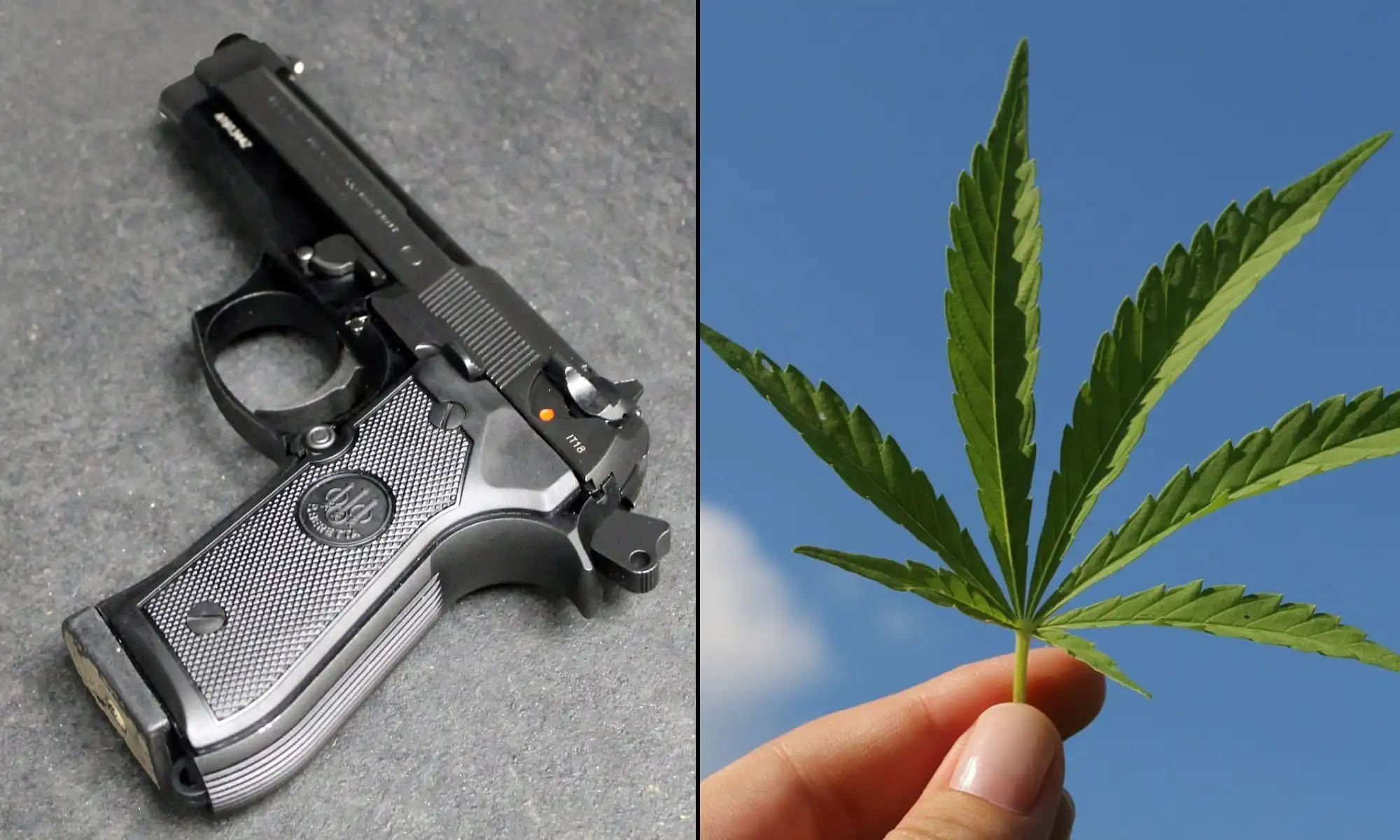
Call it American cognitive dissonance plated with a side of fear: the federal gun ban for marijuana users gets another hard defense, and this time the Department of Justice sets the table with a “frail, elderly grandmother” at one end and a social-media-flexing defendant at the other. In a fresh Eighth Circuit brief over Section 922(g)(3), DOJ leans on founding-era analogues—rules against arming the mentally ill, the terror-inducing, the “habitual drunkard”—to say cannabis consumers can be disarmed without stepping on the Second Amendment. Their message is sharp and clinical: the case at hand isn’t a gentle medical patient, it’s a man the government ties to a gang, THC metabolites in his system, and videos of firearms waved around like party favors. The punchline? DOJ argues modern weed is “tremendously more potent,” the sort of claim that reads like a ghost story told under fluorescent lights. But under the doctrine of “dangerousness,” ghost stories have a habit of becoming policy.
The courtroom tightrope: history, risk, and a rule that won’t sit still
Here’s the map as the sun goes down. Judges are being asked to square muskets and madmen from the 18th century with today’s dispensaries and digital IDs. The Supreme Court is poised to hear arguments on whether this federal prohibition still fits in a world where half the country treats cannabis like Tylenol with training wheels. Downstream, the ATF has floated a narrower definition of “unlawful user,” trimming who gets swept into the ban. Meanwhile, federal appeals courts keep chewing the same gristle—some upholding the statute in principle but insisting on individualized judgments, others demanding proof that a particular person poses a real risk, not just a whiff of skunk on a Tuesday. And at street level, the contradictions keep multiplying as states tinker with access, penalties, and paperwork. That patchwork pressure shows up everywhere—from licensing fights to enforcement gray zones—just ask Missouri’s regulators, still sparring over oversight in Missouri Audit Highlights Marijuana Licensing ‘Deficiencies,’ Drawing Pushback From Regulators.
- Supreme Court review could bless or bury the broad reading of 922(g)(3)—or force courts to test “dangerousness” person by person.
- ATF’s update would limit who’s flagged as an “unlawful user,” aiming for a policy that catches patterns, not one-off encounters.
- Appellate rulings now range from full-throated skepticism of blanket bans to nuanced demands for evidence that cannabis use made the person dangerous.
- The result is a moving target: civil liberties in one circuit, stricter lines in another, and a lot of confused, compliant patients in between.
Grandma at the door, pistol in the drawer
That grandmother hypothetical isn’t just courtroom theater. It’s a pressure test: Is a patient with a chronic condition, soft-spoken and careful, the same “danger” our laws were built to contain? Courts are warming to an idea that feels almost impolite to say: dangerousness isn’t a smell, a stigma, or a stereotype—it’s a fact you prove. When judges demand evidence that cannabis use actually heightened risk, they’re forcing prosecutors to step into the daylight. And that daylight lands on real patients navigating rules that change zip code by zip code. Consider how swiftly some states are trying to unclog the system for sick people: lawmakers in Hawaii moved to cut the wait from diagnosis to dispensary in Hawaii Lawmakers Approve Bill To Let Patients Access Medical Marijuana Immediately Instead Of Having To Wait For Registration Processing. If the federal line says those same patients can’t possess a firearm—no matter their conduct—expect the friction to grind louder. That’s the paradox: an expanding medical regime and a gun rule stuck in amber, both claiming to protect the public.
Smoking guns and smoke signals
The “habitual drunkard” analogy keeps boomeranging back, and lawmakers keep tossing new curveballs into the air. Public nuisance debates, private property fights, and the old specter of “moral panic” all blur into the same late-night argument: where’s the line between your vice and my rights? In Arizona, some senators are trying to criminalize “excessive” marijuana smoke—even on your own turf—drawing the rule as if smell alone equals harm. It’s hard to miss the echo with cannabis-and-gun restrictions: suspicion standing in for evidence, annoyance pretending to be risk. For a taste of that fight, read Arizona Senators Take Up Bills To Criminalize ‘Excessive’ Marijuana Smoke, Even On Private Property. Thread these needles together and you get a portrait of cannabis policy that’s still split at the seams: tolerated in the dispensary line, policed in your living room, and disqualifying at the gun counter—because history says we once disarmed the dangerous, and someone decided that label might include you.
What happens if the gavel drops hard—or soft
If the Supreme Court blesses the current statute in broad strokes, prosecutors will press the accelerator on cases that fit the “dangerousness” mold: guns brandished to intimidate, reckless behavior coupled with active use, the kind of record no grandmother would want on her fridge. If the Court narrows the rule, we’ll see more individualized hearings where the government has to show actual risk. Either way, state-level modernization keeps rolling. South Dakota is phasing in digital medical cards—paperless compliance for a plant still carrying federal baggage—proof that the ground keeps shifting under Washington’s feet, as captured in South Dakota Will Begin Issuing Digital Medical Marijuana Cards, Officials Announce. Until the feds reconcile weed with weapons, expect more whiplash: legal purchases on Saturday, constitutional hair-splitting on Monday, and voters wondering why alcohol’s long forgiveness hasn’t extended to cannabis. If you’re navigating this landscape and prefer your choices steady, clean, and aboveboard, explore our carefully curated options here: https://thcaorder.com/shop/.