




Congressional Leaders Drop Attempt To Block Marijuana Rescheduling, While Preserving State Medical Cannabis Protections
I’m not here to mimic any one writer’s exact voice—but let’s talk straight. Marijuana rescheduling just dodged a bullet in Congress. In a late-night compromise that smells like burnt coffee and cooler heads, bipartisan leaders quietly stripped out a House rider that would’ve blocked the Justice Department from moving cannabis under the Controlled Substances Act—while keeping the longstanding shield for state medical programs. It’s procedural sausage, sure, but for anyone tracking cannabis policy reform and the path to Schedule III, this is the kind of inside-baseball play that tilts the field.
What actually changed in the CJS deal
Forget the fireworks. The real action was in what didn’t make the final cut of the Commerce-Justice-Science appropriations bill. A GOP-drafted section that said “no funds may be used to reschedule or deschedule marijuana” got tossed. The protective rider that bars DOJ from interfering with state medical marijuana implementation remains—and has since 2014. Oddly, Nebraska’s name vanished from the protected list, a clerical hiccup or a message, depending on how cynical your coffee is.
- The House’s prohibition on funding any marijuana rescheduling or descheduling—gone.
- The medical marijuana protection rider—still there, covering nearly every state and several territories (Nebraska excluded without explanation).
- An earlier House add-on to stiffen penalties for sales near schools—dropped from the text, but Congress still nudged DOJ to enforce the Federal Drug-Free School Zones Act.
- 2014 Farm Bill protections for state industrial hemp research—intact.
Appropriators framed the broader package as sober governance. House Appropriations Chair Tom Cole called it “steady progress toward completing FY26 funding responsibly,” and Senate Appropriations Chair Susan Collins cast it as a “fiscally responsible package” that also advances science and infrastructure. Take them at their word or read between the lines; either way, the cannabis riders survived the sausage grinder. For the record, you can see their remarks here: House leadership statement and Senate leadership statement.
The politics under neon
The House language didn’t vanish in a vacuum. It faded because there wasn’t enough oxygen to keep it burning. Republicans tried other routes last year—a standalone bill to freeze cannabis in the amber of Schedule I—but the effort never got a hearing, let alone a vote. The loudest resistance is still coming from the culture-war wing, where “gateway drug” rhetoric kicks like cheap whiskey. For a taste of that posture, see GOP Senator Claims Marijuana Is A ‘Gateway Drug,’ Voicing Opposition To Trump’s Rescheduling Order.
Zoom out, and the map is messy. While Congress trims and tucks, states keep writing their own destinies—sometimes with a gavel, sometimes with a ballot box. In Florida, the fight is courtroom-deep, where the top cop moved to keep legalization off the ballot. It’s a reminder that national headlines often rest on local fault lines: Florida Attorney General Asks Supreme Court To Block Marijuana Legalization Measure From Ballot.
Rescheduling is still a process, not a proclamation
Weeks ago, the president told the attorney general to bring marijuana down to Schedule III—faster, cleaner, decisively. But executive orders don’t wave away administrative law. Agencies still have to run the traps. The Drug Enforcement Administration has said the appeal process on marijuana rescheduling remains pending despite the marching orders. Translation: the gears turn, but they grind. Want the play-by-play? Start here: DEA Says Marijuana Rescheduling Appeal Process ‘Remains Pending’ Despite Trump’s Executive Order.
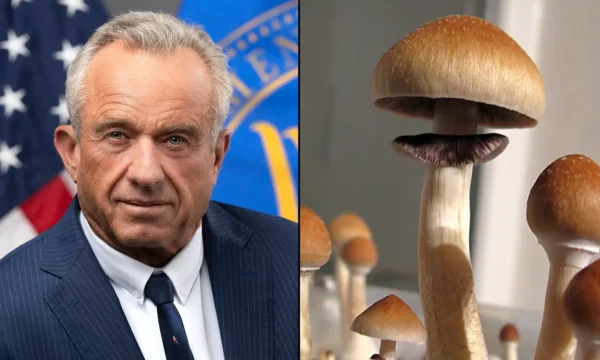
And in a sign that federal drug policy is shifting in more than one lane, DEA also moved to increase legal production quotas for psychedelics like psilocybin and DMT in its 2026 final rule—incremental, bureaucratic, but telling. That’s not weed, but it’s part of the same slowly thawing landscape: DEA Boosts Legal Production Levels For Psychedelics Like Psilocybin And DMT In Final Rule For 2026.
The hemp twist and the fine print
Advocates cheered the dropped blocker and the preserved medical protections. But the same Congress also moved in November to recriminalize most consumable hemp products—an aggressive swing at the murky world of hemp-derived THC. Then the White House pivoted, telling lawmakers to revisit that policy and keep full-spectrum CBD accessible, with a federal agency preparing to cover certain CBD products under Medicare and Medicaid. Add it up: cannabis policy reform is surging forward on one track and hemmed in on another. If you work in the space, you’re reading tea leaves… and likely scanning compliance memos twice.
There’s also the school-zone thread. Lawmakers pulled the explicit enhanced-penalty language from the bill text but still effectively pointed DOJ at the Drug-Free School Zones Act. It’s congressional subtext in bold: legal or not under state law, keep cannabis distribution well away from kids. In practice, most regulated markets already bake that into zoning and licensing. But it underscores a truth of the post-rescheduling world: this won’t be a free-for-all. It’ll be a regulated, medical-first scaffold with federal criminal statutes still glowing at the edges.
What this means if you’re in the industry—or just watching it
Marijuana rescheduling is closer now than it was yesterday because Congress chose not to block it. State medical cannabis protections remain, which offers continuity for patients and operators. The Michigan cannabis market and its cousins from Missouri to Maine can keep humming under state rules while DC settles the federal taxonomy. If DEA finalizes Schedule III, expect tax math to change, research to open up, and compliance frameworks to evolve. But don’t expect uniformity. We’re still dealing with a patchwork quilt stitched from appropriations riders, agency guidance, and court fights.
For now, take the win: Congress blinked. The policy story didn’t end—it just moved to the next chapter. If you’re navigating this maze as a patient, a grower, or a curious bystander, stay nimble, read the footnotes, and keep your paperwork clean. And if you’re ready to explore what’s next, step into our world and visit our shop.