
Congressional Lawmakers Approve Farm Bill With Hemp Provisions—But Not The THC Ban Delay Stakeholders Wanted
Hemp THC ban delay slips through Congress’s fingers as the Farm Bill advances—another late-night pivot in America’s long, jittery dance with weed-adjacent commerce. The House Agriculture Committee moved the 2026 Farm Bill out of markup on a 34–17 vote, but the long-shot bid to slow-walk the federal hemp THC ban never made it to the floor. Two amendments that would have pushed the recriminalization timeline back—one year, then two—were ruled not germane, leaving a fast-approaching November switch that could darken shelves and upend the hemp industry. That’s the thing about cannabis policy in this country: it’s never just policy. It’s livelihoods, real and messy. It’s small-town processors staring down compliance spreadsheets. It’s a convenience-store cooler full of cannabinoid beverages that might become contraband by winter. And it’s Congress insisting that the big argument—regulate or prohibit—belongs to another room down the hall.
Inside that room this week, the personalities mattered. Rep. Jim Baird filed the delay amendments; a personal tragedy kept him away. Rep. Angie Craig stepped in, made the case for breathing room, then withdrew rather than force a doomed vote. Chair Glenn “GT” Thompson said this is Energy and Commerce turf, not Agriculture’s, and nodded to public health concerns that have festered since 2018. The hearing felt like the kind of Capitol Hill tasting menu you don’t forget: one part procedural chill, one part real panic from operators hanging by margin and timing. If you want the paper trail, the committee’s docket and bill text are posted on the House site—start with the event listing and documents for the markup here and here: House Agriculture Committee event page and markup documents. The debate boils down to a clean, hard question: does Congress build a regulatory lane for intoxicating hemp cannabinoids—or erect a barricade and dare the market to swerve?
Here’s the pivot that did make the cut: the Farm Bill’s hemp title quietly tunes the rules for industrial hemp—fiber and grain—while leaving “intoxicating” products to another day. Think of it as new guardrails for growers who were never chasing a buzz in the first place. Per the committee summary, states and USDA get more room to tailor oversight while boosting lab capacity and tightening intent documentation. In practice, the scaffolding looks like this:
- Producers must designate their hemp production type, clarifying whether they’re in the fiber/grain lane or elsewhere.
- States and USDA may use visual inspections, performance-based sampling, and certified seed to build smarter testing plans for industrial hemp.
- States and USDA can eliminate the 10-year controlled-substance felony ineligibility for industrial hemp growers.
- Growers seeking reduced testing must document clear industrial intent; fail to show it, and testing snaps back on.
- States must report crops inconsistent with an industrial designation to law enforcement; knowingly crossing that line risks a five-year license ban.
- USDA must accredit more laboratories and expand access for hemp testing—fewer bottlenecks, faster results.
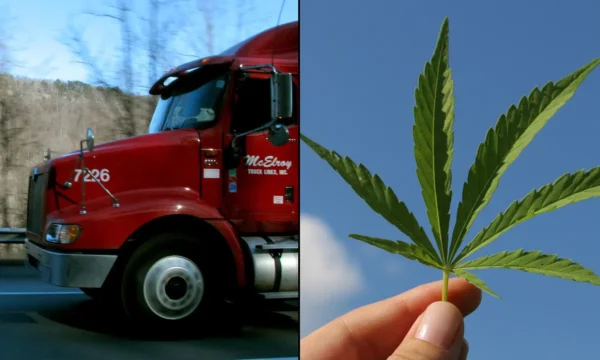
That’s the dry side of the field. The storm front is the looming definition shift for legal hemp products: “total THC” (not just delta-9) will count, pulling in delta-8 and other isomers, with a catchall for cannabinoids that act like THC. Anything synthesized outside the plant? Off the table. “Intermediate” products pitched directly to consumers? Also out. And legal retail goods will be capped at a startling 0.4 milligrams per container of total THC or THC-like cannabinoids. FDA was supposed to publish lists of naturally occurring cannabinoids, tetrahydrocannabinol class members, and THC-like compounds within 90 days of enactment; that deadline came and went, leaving brands, retailers, and farmers without a chart while the shoals get sharper. Meanwhile, the policy map remains a patchwork: cost breaks for veterans here, federal hard lines there, different courts weighing in over there. Consider the crosscurrents: Florida Lawmakers Pass Bill To Provide Discounted Medical Marijuana Cards For Military Veterans. Yet at the same time, compliance culture doesn’t flinch: Use Of Medical Marijuana Or Hemp Doesn’t Excuse Drug Testing Violations, Trump’s Transportation Department Warns. Try reconciling those realities from a warehouse floor stacked with seltzers and gummies.
So what now? Barring a late-stage rescue in another committee or a standalone fix, betting on a Farm Bill vehicle to delay the hemp THC ban looks like chasing a train already leaving the station. Energy and Commerce may inherit the regulatory fight, and industry trade groups will keep hammering on practical pathways—potency standards, age gates, manufacturing controls, truth-in-labeling—that regulate instead of erase. Law enforcement coalitions are pushing back just as hard to let the ban land without delay. In the vacuum, smart operators scenario-plan: reformulations for cannabinoid beverages; supply chain segregation between industrial and cannabinoid-bound material; meticulous documentation; an exit ramp to fiber and hurd products if the math breaks. Clarity matters, and the courts know it—look to the accountability drumbeat in New Jersey Cities Must Explain Marijuana Business Denials, Court Says. And the broader drug-policy wind keeps shifting: Hawaii Senators Advance Bill To Create Psychedelics Task Force And Study Pathways To Access Psilocybin And MDMA. If you’re navigating this evolving landscape and want compliant, high-quality options as federal rules settle, take a quiet lap through our shop: https://thcaorder.com/shop/.