America Doesn’t Have A ‘Marijuana Problem,’ As NYT Claims—It Has a Cannabis Education Problem (Op-Ed)
America’s cannabis education problem isn’t a morality play—it’s a systems failure hiding in plain sight. You can feel it in the jittery headlines and hear it in the whisper network of waiting rooms and barstools: a vague sense that legalization unleashed chaos. But that story collapses under the weight of the facts. Cannabis is still stuck in Schedule I at the federal level. In 2024, health agencies said out loud what clinicians have long practiced in the gray: cannabis has accepted medical use and should move to Schedule III. Then the recommendation parked at the Department of Justice and hasn’t budged. Research remains shackled, prescribing remains impossible, and integration into clinical care is a patchwork at best. To call this a permissive landscape is like calling a locked kitchen “open” because someone cracked a window. Even the New York Times waved a warning flag, but the frame misses the mark; this isn’t a free-for-all—it’s a problem of knowledge, training, and regulation, not a runaway drug. If you want the mood music that shaped the debate, read the editorial they ran and ask yourself whether fear or evidence is setting the tempo: The NYT editorial.
Evidence over panic
Much of the “skyrocketing use” argument leans on survey snapshots from different eras and pretends they’re the same photograph. In 2000, using marijuana could get you cuffed, fired, or shunned. People lied to clipboards. Today, with state-legal markets and waning stigma, people answer honestly. That’s not an epidemic; that’s transparency. None of this means cannabis is harmless. It can sedate, scramble coordination, spark anxiety, and cloud thinking; for a vulnerable minority, heavy or prolonged use can flip into acute psychosis. Cannabinoid hyperemesis syndrome is real and showing up more often in ERs. Interactions with other medications matter, too—shared metabolic pathways, additive sedation, the usual pharmacology that should set off the clinical spidey-sense. Here’s the clinical fulcrum: cannabis doesn’t cause respiratory depression and won’t deliver a fatal overdose the way opioids can. And many patients report dialing back or ditching opioids after starting medical cannabis, which is a harm-reduction chord worth playing on repeat. The calculus is nuanced, not nihilist.
Integration, not ideology
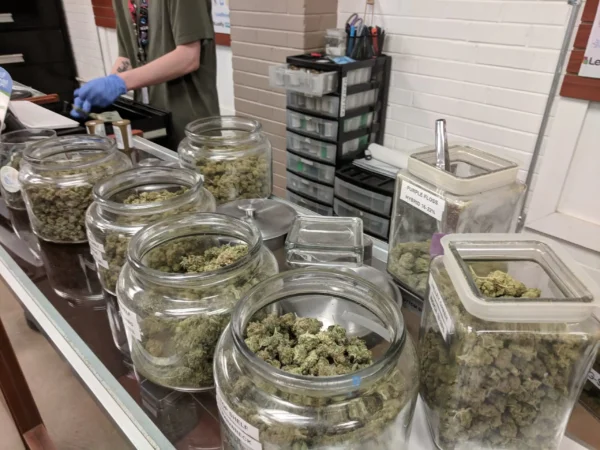
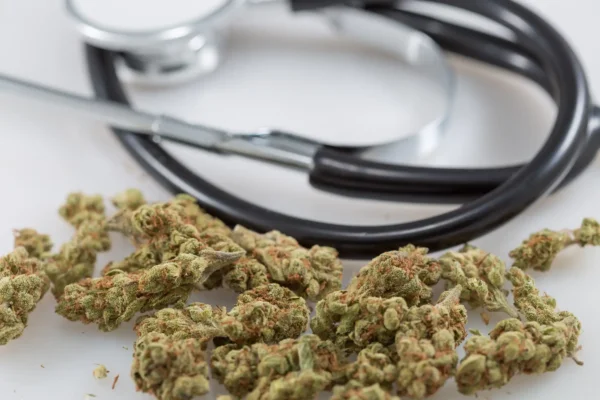
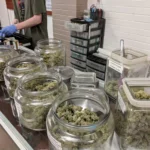
Potency caps make for righteous press conferences but flimsy pharmacology. Most people self-titrate—stronger product, smaller amounts. The blunt instrument of percentage limits substitutes symbolism for science and ignores how dosing works in real life. What we need is boring, unglamorous, clinically sound work: screening for risk, counseling on use patterns, monitoring outcomes, and reconciling cannabis alongside every other medication. That work belongs in clinics and pharmacies, not the aisle between gummies and grinders. Yet most clinicians never learned cannabinoid pharmacology. Drug-interaction databases are patchy. Guidelines are fragmented. So patients lean on budtenders—often kind, often smart, but shut out from medical histories and lab results. Meanwhile, the medical case moves on: accepted benefits for nausea, appetite loss, and chronic pain; promising roles in palliative care, neurology, inflammatory conditions, and symptom management. Real integration looks like hospital bedsides too, which is why moves like Connecticut Lawmakers Take Up Bill To Allow Medical Marijuana Access In Hospitals signal maturity rather than moral drift.
The patchwork problem
Policy in America is a quilt—some squares silk, some burlap, some still missing. In Virginia, the politics tell you everything about momentum and contradictions, where even conservatives can see the ground shifting beneath their boots: Virginia Republican Lawmakers Explain Why They Voted To Legalize Marijuana Sales. In Florida, procedural knife-fights keep voters circling the same block, proof that legality on paper can be erased with a pen stroke: Florida Officials Reset Marijuana Campaign’s Signatures To Zero For Legalization Ballot Initiative As Legal Challenges Persist. And in Hawaii, you can feel a wider drug policy aperture creaking open—medical curiosity meeting political will—where lawmakers want a proper task force to study safe access to psilocybin and MDMA: Hawaii Senators Approve Bill To Create Psychedelics Task Force To Study Pathways For Access To Psilocybin, MDMA And More. The throughline is clear: our policy churn is outpacing our playbook. We wring hands over cannabis taxation and potency limits while starving the system of clinician training, pharmacovigilance, and coherent federal guidance. That’s not caution; that’s drift.
Build the playbook
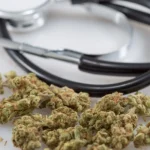
America knows how to regulate powerful molecules. We do it daily with anticoagulants, biologics, chemo, and opioids. You set standards; you educate; you monitor; you correct fast. Cannabis was exiled from that system for political reasons, not scientific ones. So flip the script. Move rescheduling from a memo to a mandate. Fund continuing medical education that treats cannabinoid pharmacology like a real discipline, not a trivia category. Braid cannabis into EHRs and medication reconciliation, with sober guidance on interactions and contraindications. Stand up surveillance that captures adverse events without turning patients into suspects. Create labeling that’s honest about potency, contaminants, and dose ranges. Bring the plant into the clinic so patients aren’t learning complex therapy from a countertop consult. Fear is easy. Evidence is harder. But the payoff—a safer, smarter, clinically integrated market—beats another season of panic headlines and policy theater. If you’re ready to explore compliant, high-quality options with clear information, take a look at our shop.