

Florida Lawmakers Approve Bill To Punish Medical Marijuana Patients For Having Open Containers Of Cannabis In Cars
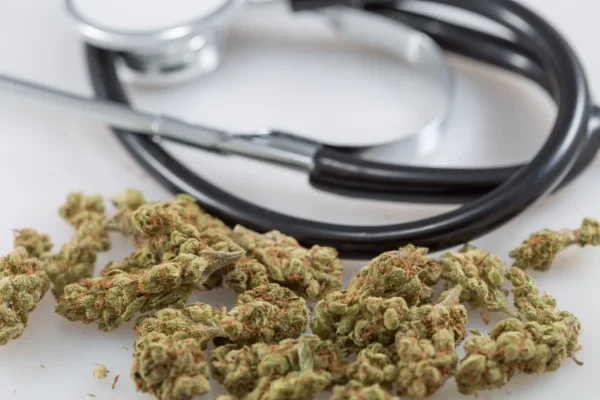
Florida medical marijuana open container ban. That’s the headline that slaps you awake like a stiff espresso after a long night, and it’s the wager lawmakers are placing on the table in Tallahassee with HB 1003: treat cannabis in cars like booze, punish the careless, and hope the culture shifts. The pitch is simple and stern—make it taboo to ride with weed accessible, even if you’re a registered medical patient. The backdrop is grimmer: more than 30 percent of traffic deaths tied to impairment, grim little notches on a state highway system that knows the metallic taste of loss. Like alcohol’s long, ugly romance with the open road, cannabis is getting dragged under the same fluorescent lights and asked to empty its pockets. The message, for better or worse, is: not while you’re driving, not while you’re riding, not within reach. Florida calls it consistency. Patients call it something else.
What HB 1003 actually does
- Bars medical marijuana patients from having an open container of cannabis if they’re driving or a passenger.
- Defines “open” as within the driver’s immediate reach while seated, or in a passenger’s physical control.
- Sets a three-strike consequence: after a third violation, patients could lose their medical marijuana card—though the bill’s sponsor says he’s open to changing or scrapping that penalty.
- Allows counties and municipalities to adopt stricter local rules, which has advocates squinting at the fine print.
Supporters sell it as common sense. They point to sobering data and street-corner reality. There’s the six-year Ohio study where 40 percent of drivers who died in crashes tested positive for THC. There’s the Florida rep recounting how he watched two motorists brazenly swap a bong through car windows like a baton in a relay race. And there’s that old-school refrain: impairment kills; rules save lives. It’s a pitch made in three sentences and one photograph you don’t want to see, the kind that hangs in the lobby of a highway patrol barracks and turns the air cold. For lawmakers pushing this, cannabis open-container enforcement is a seatbelt for the soul: not a moral judgment, just a line on the pavement. If alcohol gets one set of guardrails, they argue, cannabis needs the same.
Fault lines in the debate
Across the dais, critics don’t argue for stoned driving. They argue for sense. They point out the bill’s quiet trapdoor: local governments “may” go harder than the state. That means a plastic jar in Brevard could be a slap on the wrist, but in Volusia you might be staring down something that looks a lot like criminalization. They warn that THC lingers in bodies for weeks—long after impairment is gone—so “positive” doesn’t mean “dangerous” when the lab report drops. And they bristle at the double standard: nobody seizes a pain patient’s Oxycodone prescription for cracking the cap in the back seat. The bill’s definition of “open container” feels tidy until you try to live under it at 11 p.m. on a dark shoulder, headlights in your mirror, heart thudding. Even the word container has legal teeth and regulatory shadows; for a taste of how technical this can get, see how federal agencies are wrestling with packaging and labeling in hemp, an ongoing saga detailed in FDA faces deadline to publish cannabinoid lists and define hemp product ‘containers’. The bottom line: patients aren’t asking for a free pass. They’re asking not to be collateral damage in a moral panic masquerading as uniformity.
Politics and precedent
The bill cleared its first committee on a party-line vote—Republicans in favor, Democrats opposed—and now it’s got two more stops in the House while its Senate twin lingers without a hearing. The sponsor says he’s flexible on the nuclear option of yanking a patient’s card after three strikes. Maybe six, maybe ten, maybe none at all, he muses, as if calibrating the heat on a stove. That’s politics: posture hard, then sand down the edges when the room winces. Meanwhile, the broader map of marijuana policy is a patchwork quilt stitched with mismatched thread. Minnesota is state-running a slice of its marketplace with a cautious confidence that would’ve sounded like science fiction a decade ago—see the experiment up close in A new government-run marijuana store just opened in Minnesota. Pennsylvania, by contrast, can’t stop arguing long enough to move the ball, a civics-class stalemate chronicled in Pennsylvania House lawmakers slam Senate over marijuana legalization inaction. Even at the federal level, the ground keeps shifting, with advocates eyeing rescheduling signals like sailors reading the horizon—context that matters for impaired-driving standards and enforcement benchmarks, as sketched in Marijuana advocates hope Trump’s Attorney General will give a rescheduling update. Florida’s bill doesn’t live in a vacuum; it’s part of a messy national rehearsal for an adult conversation we still haven’t nailed.
Where this leaves patients—and the road ahead
So where does the rubber actually meet the road? With clarity, or the illusion of it. If Florida wants to mirror alcohol’s open-container rules, it owes patients precise language, training for law enforcement that distinguishes possession from impairment, and a science-based method to assess who’s actually unsafe behind the wheel. It owes families safer highways without turning glove compartments into legal minefields. Most of all, it owes consistency—because nothing curdles public trust like two zip codes, two deputies, and two different outcomes for the same stale pre-roll. This debate isn’t about whether we let people blaze and barrel down I-95. It’s about building a fair, enforceable standard in a market that went from illicit to essential with whiplash speed. If lawmakers insist on drawing new lines, they should light them with data, not anecdotes; with measured penalties, not moral crusades; with room for medicine to be medicine. And if you’re navigating this evolving terrain as a patient or a curious consumer, stay informed, travel smart, and when you’re ready to explore compliant, high-quality options at your own pace, take a look at our shop: https://thcaorder.com/shop/.