

Trump’s Attorney General Would Form A Marijuana Commission To Prepare For Federal Legalization Under New Senate Bill
PREPARE for the Hangover: A Federal Marijuana Legalization Commission Takes Shape
Federal marijuana legalization commission. Say it out loud like a bar order at last call, because that’s what the PREPARE Act really is—a stiff pour of reality after a decade of hazy talk. Sen. John Hickenlooper has thrown a fresh log on the fire, filing a bill that would force the attorney general to stand up a commission and sketch an alcohol-style regulatory map for a post-prohibition cannabis market. The timing is no accident. With an executive order moving marijuana from Schedule I to Schedule III, Washington finally admits the plant isn’t the boogeyman—but also that the path forward needs guardrails, mile markers, and a roadside assistance plan. Hickenlooper—once the Colorado governor who eyed legalization like a bad tattoo—now wants the feds to plan the grown-up version: rules for labels and labs, taxes and trade, commerce without chaos. It’s the kind of federal cannabis policy reform that sounds dry on paper and tastes like freedom when it works.
What the PREPARE Act actually does, without the smoke machine
Start the clock. Within 30 days of enactment, the attorney general must assemble a Commission on the Federal Regulation of Cannabis. It gets twelve months to deliver a report to Congress, and not a glossy brochure—an actual blueprint for alcohol-like regulation. The panel studies the patchwork of state systems, the federal playbook for booze, and then translates that into cannabis. It digs into the damage of criminalization, especially for minorities, low-income communities, and veterans who’ve paid twice: first in service, then in stigma. It inventories the potholes—product safety standards, testing, labeling, youth protections—that too many states re-invent in isolation. It tackles production rules and the knottier questions: intrastate versus interstate trade and what happens when state lines can no longer keep THC molecules at bay. It stares down the twin brick walls of banking and research, then asks how to keep hemp and marijuana from cross-pollinating both in fields and in policy. And finally, it answers the question that keeps budget writers up at night: how do we report and collect cannabis revenue efficiently without strangling the legal market?
Who pulls up a chair, and why it matters
This isn’t a clubhouse of true believers; it’s a roster of agencies that usually only meet at interagency drills. Health and Human Services and NIH to parse the science. Justice and ATF to tame the legal and enforcement angles. Agriculture for cultivation. Veterans Affairs for care and consequence. Treasury, IRS, and the Alcohol and Tobacco Tax and Trade Bureau for the money trail. FDA for product standards. Transportation and NHTSA for roads and rails. Labor and OSHA for workplace safety. Commerce, SBA, and the U.S. Trade Representative for industry and export ambitions. Education, Housing, the Office of National Drug Control Policy, NIST, the Office of Minority Health, the Indian Health Service—the list reads like a federal phone directory because a national cannabis market touches every system we’ve built. Crucially, the commission must also seat people who’ve worn the scars: someone formerly incarcerated for non-violent cannabis charges, a prevention expert, a historian of criminalization, a research pro, a veteran of state-level legalization, and a representative from heavily regulated consumer goods. There’s even a parity clause for partisan balance. It’s technocracy with a memory—regulation shot through with the human stories that make or break legitimacy.
Context, contradictions, and the road between Schedule I and reality
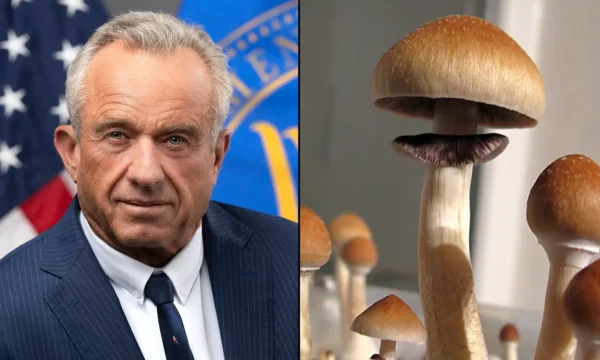
Rescheduling to Schedule III moves the needle, but it doesn’t erase the ink. Compliance regimes don’t pivot on a dime, and safety-sensitive workers remain under the microscope; remember, Trump’s Marijuana Order Doesn’t Change Drug Testing For Safety-Sensitive Workers, At Least For Now, Transportation Department Says. Culture, meanwhile, barrels ahead of policy like a band on tour. A snapshot of where America’s head is at: One In Three Americans ‘Pre-Game’ With Marijuana Before Family Holiday Gatherings, Survey Finds. But the legalization story doesn’t march in a straight line. In Massachusetts, a backlash campaign is muscling onto the ballot: Massachusetts Campaign To Scale Back Marijuana Legalization Has Enough Signatures To Advance Toward Ballot, Officials Say. And beyond cannabis, the reform frontier keeps creeping outward; consider the latest step in Trenton: New Jersey Bill To Legalize Psilocybin Therapy Clears Another Assembly Committee. That’s the tension the commission has to navigate: a country living one reality, legislating another, and trying not to stall in the gap.
The stakes: money, mercy, and the map ahead
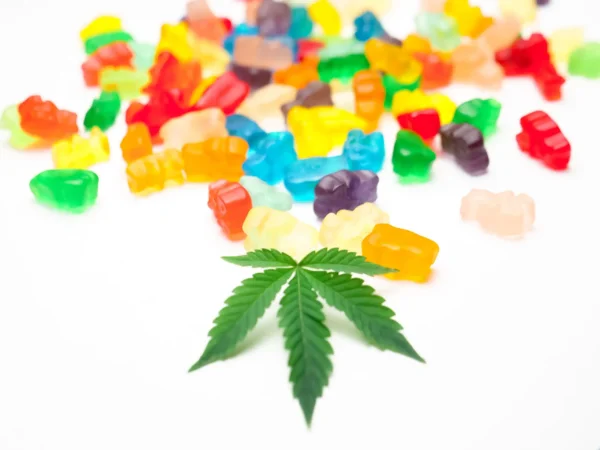
A federal framework is more than a tidy spreadsheet; it’s oxygen. Without banking clarity, small operators stay stuck paying in cash and sleeping with one eye open. Without uniform testing and labeling, consumer trust dissolves with every mislabeled gummy. Without interstate rules, growers in efficient climates can’t sell where demand lives, and the legal cannabis revenue story remains a state-by-state scavenger hunt. The PREPARE Act doesn’t legalize on its own, but it builds the bridge. Hickenlooper’s call to expunge federal marijuana records is the moral ledger that should run alongside the fiscal one; legalization without relief is like opening the bar after you’ve locked regulars in the cellar. If Congress wants an adult-use, alcohol-like regulatory system that actually works, it will need to move like a chef in the weeds—decisive, disciplined, and aware that every ticket on the line is a person waiting. When you’re ready to experience the plant in its purest, lawful form while the suits finish drawing the map, swing by our shop at https://thcaorder.com/shop/.