



GOP Congressman Presses Federal Financial Officials On Marijuana Industry’s Banking Access Problems
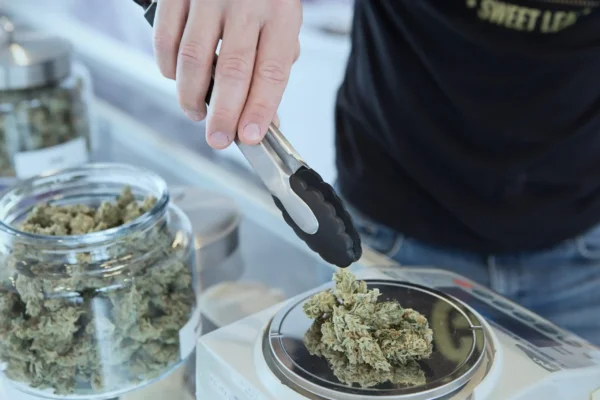
Marijuana banking access is still jammed up in the vault, and you can hear the gears grinding from Capitol Hill to the corner dispensary. In a hearing room where fluorescent lights wash out the color from everyone’s faces, Rep. Warren Davidson asks the kind of question that lands with a thud you feel in your ribs: are banks still shutting out state-legal cannabis businesses? The answer, offered between the lines by the nation’s top prudential voices, is the same one we’ve heard for years—if you sell a product your state calls legal but Washington still stamps “Schedule I,” your money’s radioactive. That’s the aching contradiction at the heart of cannabis banking: compliance officers counting beans with one eye on the ledger and the other on federal prohibition, while everyone pretends we can keep doing this dance without stepping on toes. The Michigan or Missouri shop owner who can’t wire payroll isn’t an abstraction; they’re a weekly safety risk walking a canvas bag of cash through a dark parking lot because the policy clock stopped somewhere around the Nixon years.
In the prudential world, risk is a language more than a feeling, and cannabis banking reads like an untranslated dialect. Some banks and credit unions do the work—enhanced due diligence, suspicious activity reports, an alphabet soup of policies that could sedate a linebacker—and they do it because their local economies demand it. Others read the Controlled Substances Act and see career-ending headlines. Five years ago, community bankers reportedly had one conversation above all others—cannabis. Now fraud has muscled to the front of the queue, but marijuana banking never left the lobby. Strip the rhetoric and you get an ugly, simple truth: an industry that generates billions in legal cannabis revenue still depends on cash, armed guards, and a hope-and-prayer approach to payroll. That leaves owners exposed, employees anxious, and customers paying the premium that fear quietly tacks onto every transaction. Until Congress passes a durable framework, “cannabis taxation,” “compliance,” and “risk” are just station stops on a line that never reaches the end of the track.
On paper, the fix looks easy: a bipartisan cannabis banking bill—call it SAFE, SAFER, or merely sane—that tells banks they won’t get slapped for serving state-legal businesses. In practice, the bill is what everyone swears they want to pass after they finish whatever else is on fire. The House can pass it on Tuesday and the Senate can lose the map by Wednesday; the cycle repeats, and dispensaries keep buying safes instead of software. Some lawmakers insist rescheduling—from Schedule I to Schedule III—would be the domino that finally tips cannabis banking into law. Others argue senators keep their feelings about the plant on one shelf and their votes on financial services on another. Meanwhile, uncertainty at Main Justice keeps operators guessing about where enforcement lines really sit, a fog captured in headlines like Congresswoman Demands Details On Trump DOJ Marijuana Policy After Biden Guidance It Rescinded Is Revealed. If you’re counting on stability, “maybe soon” is not a risk policy.
The American cannabis map doesn’t look like a country; it looks like a patchwork quilt sewn at midnight. One state expands access or hems in potency; another trims back home grow; a third holds fast to prohibition like it’s an heirloom. Policy churn never stops. Reformers draft, opponents litigate, regulators rewrite. Even states pushing into tomorrow—think lawmakers setting the table now for 2026—show that momentum comes in waves, not straight lines, as in Missouri Lawmakers Pre-File Multiple Marijuana And Psychedelics Bills For 2026 Session. Then you have courtroom crosswinds threatening reforms voters already approved, like the stakes laid bare in Nebraska Supreme Court Hears Case Seeking To Overturn Medical Marijuana Law Approved By Voters. Banks don’t thrive on patchwork; they require uniformity, or at least predictability. Every fresh statute or lawsuit is one more memo for compliance, one more reason for a risk committee to say, “Not yet.” That’s the collateral damage of federal inaction: a state-legal cannabis market that’s mature enough to fuel payrolls and tax bases—but still too politically radioactive for full financial integration.
You can’t talk about the cannabis industry impact without talking about the sheer volume of facts now on the table. The science has been roaring forward, reshaping what policymakers and risk officers think they know, as underscored by Researchers Published More Than 4,000 Studies On Marijuana This Year As Trump Continues To Weigh Rescheduling. That research drumbeat, paired with state-level realities, makes the old federal posture look like a rotary phone in a 5G world. If Congress wants to reduce robberies, protect workers, cut compliance theatrics, and capture more transparent tax revenue, marijuana banking access isn’t a favor to the industry—it’s infrastructure. Until Washington aligns policy with the Michigan dispensary clerk’s daily reality or the Ohio cultivator’s payroll crunch, the cash economy will keep humming in the shadows. And if you prefer your cannabis journey to be legal, safe, and above board—from seed to sale to your coffee table—consider supporting the operators who play by the rules; when you’re ready, explore our curated selection here: https://thcaorder.com/shop/.