

3 In 5 Indiana Residents Support Marijuana Legalization, New Poll Finds As State Lawmakers File Reform Bills
Indiana marijuana legalization isn’t a whisper in a dorm room anymore—it’s the kind of blunt, kitchen-table math that makes even cautious lawmakers reach for a calculator. The latest Hoosier Survey from Ball State University’s Bowen Center took the temperature of 600 residents and found a clear heat source: 59 percent say legalize cannabis for both medical and recreational use, and another 25 percent support medical marijuana alone. That’s 84 percent—an overwhelming mandate pulsing into the 2026 legislative session, where marijuana policy reform will either get a serious hearing or another year of polite Midwestern avoidance. For Indiana’s cannabis market, the question isn’t whether public opinion has shifted; it’s whether the Statehouse will follow before the state’s consumers and patients keep driving across borders, taking their dollars—and potential legal cannabis revenue—with them.
Hoosiers have moved on; has the Capitol?
Support isn’t just coming from the usual suspects in tie-dyed hoodies. As Bowen Center’s Andrew Bauman noted, growth is coming from business leaders and parents—the voters who care how a law works Monday morning at 8 a.m., not just how it sounds on a Friday night. He described the surge as near-exponential, with non-traditional backers stepping up, a signal confirmed in his comments to Inside Indiana Business. Meanwhile, in the legislature, a Democratic lawmaker has already filed a bill to legalize possession and modest home cultivation—small steps, sure, but the kind that make a map. Yet the road is still lined with familiar orange cones: a conservative chamber wary of adult-use and convinced that medical frameworks morph into full legalization overnight. If that posture hardens through the election cycle, it won’t just waste momentum; it could invite an Legal Marijuana Access Faces An Existential Threat In 2026, And We Must Fight Back (Op-Ed) moment, where political headwinds erase hard-won gains because the opposition turned out, and complacency didn’t.
Rescheduling smoke signals and a rebuttal to stale scare talk
The governor has started to read the room, signaling he’s amenable to medical marijuana and acknowledging that a presidential executive order directing cannabis from Schedule I to Schedule III could add a little fire to Indiana’s debate. That move doesn’t legalize state markets, but it reclassifies risk and stigma—loosening research shackles, reframing medical use, and undermining the narrative that marijuana sits with the worst of the worst. Not everyone’s buying. One member of the state’s congressional delegation said he hopes Indiana never legalizes, arguing he doesn’t want to “smell it on the streets” and claiming legalization has caused more crime. But the numbers—and the epidemiology—are messier and less sensational. In fact, federal health leaders have said teens are finding it harder to access marijuana even as legalization spreads, a point explored here: Federal Health Official Says Teens Are Finding It Harder To Access Marijuana Even As Legalization Spreads, Contrary To Opponents’ Fears. Regulated markets card buyers, track product, and put guardrails where the illicit market never bothered. That’s not culture-war folklore; it’s policy design.
The blueprint: evidence, not ideology
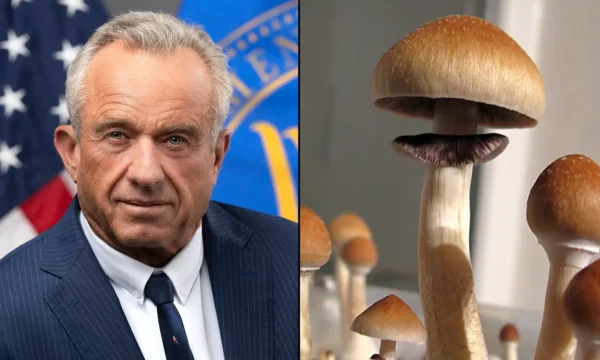
Here’s what Indiana should be arguing about at 9 a.m. on a Tuesday: dosage, labeling, product safety, impaired driving standards, and how to design a medical program that treats real conditions without becoming a free-for-all. Claims that cannabis is a blanket “deterrent to mental health” oversimplify an arena where context and clinical guidance matter. Other states have shown how regulated access and data-sharing programs can improve outcomes over time—and how missteps get corrected in public. Look at how adjacent reform movements are maturing: when New Jersey’s legislature advanced a psilocybin therapy pilot program, it wasn’t a daredevil leap; it was a cautious, clinical pilot with guardrails, oversight, and purpose. That arc—incremental, documented, adult—is the same one Indiana could follow, and it’s captured here: New Jersey Legislature Passes Bill To Create Psilocybin Therapy Pilot Program, Sending It To Governor. The point isn’t to worship the plant; it’s to regulate it like grown-ups.
From poll to policy: the hard, boring work that matters
Indiana’s voters have handed lawmakers the permission structure. Now comes the grind: a medical framework that starts with serious conditions and tightly defined access; clean product standards that squeeze out the gray market; a decriminalization and expungement track that addresses past harms; and a tax structure that funds public health without encouraging a race back to illicit sellers. That’s how you balance cannabis taxation and consumer safety. Pair it with statewide education, real-time data on outcomes, and targeted enforcement against dangerous operators, not adults with a few grams. And remember the federal crosscurrents: hemp, CBD, and novel cannabinoids are in flux, with Congress debating timelines while former and current power brokers talk access. That backdrop is more than noise; it’s a reminder that prohibition lines blur when markets evolve, as laid out here: GOP Congressman Files Bill To Delay Federal Hemp Ban For Two More Years As Trump Calls For CBD Access. Indiana can lead by writing rules that acknowledge reality: adults will seek cannabis, patients already do, and smart regulation shapes behavior better than scolding. If you’re curious how regulated, compliant offerings look in practice—and where this market is headed—take a look at our shop.